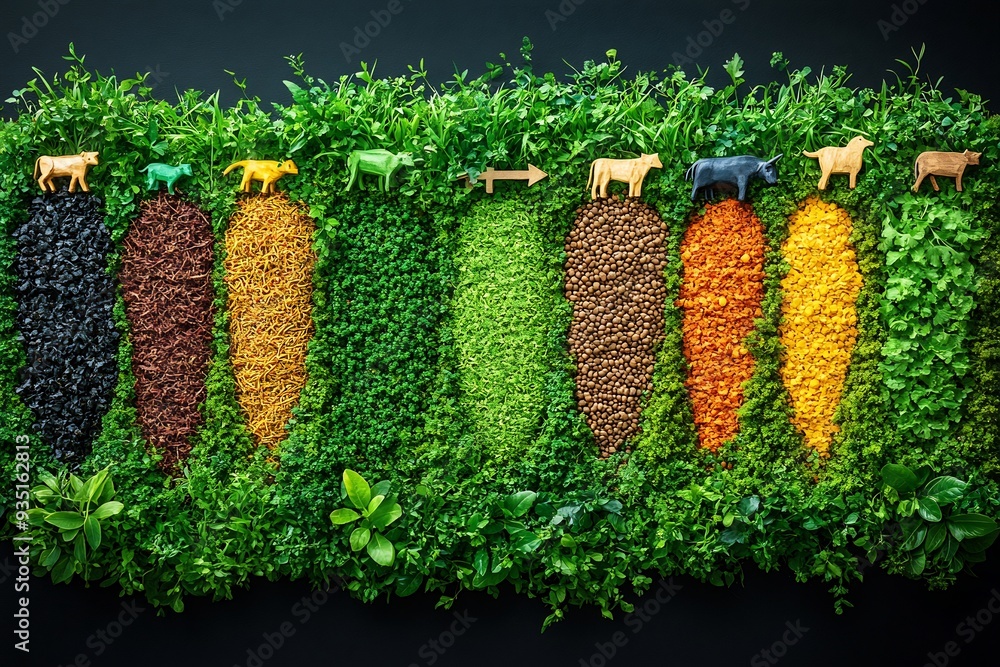
Keep critical food supply chains operating to save lives during COVID Biology Diagrams Ocean ecosystem food chains are perhaps the most primitive and curious levels of food webs. With oceans covering over 70 % of the Earth's surface, owing to that large expanse, they are home to over 230,000 documented marine species. The chain starts with primary producers, such as Phytoplankton, and moves up to apex predators like sharks and orcas. For instance, a decline in a primary consumer due to disease can lead to overgrowth of producers and a subsequent decline in other organisms dependent on the producers for food. Conservation Efforts. Food chains guide conservation efforts by identifying keystone species—those that play a critical role in maintaining the structure of an ecosystem. The immediate impact of animal disappearance would be a massive disruption of food chains and ecosystems. Every animal, from the tiniest insect to the largest whale, plays a crucial role in its environment. While reversing the current extinction rate completely may be unrealistic, conservation efforts can significantly slow it down. These
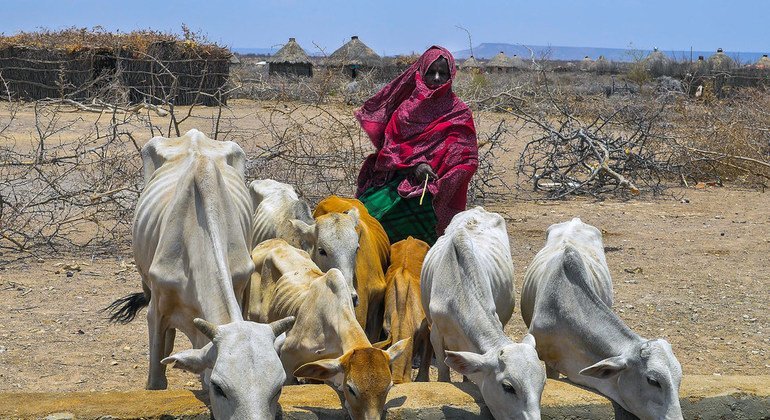
The food chain concept illustrates energy flow, trophic levels, dynamics, and ecological significance in ecosystems. Conservation and Management. To safeguard food chains and preserve ecosystem integrity, conservation and management efforts are essential: Protected Areas: Establishing and managing protected areas,

Understanding Ocean Food Chains: From Plankton To Apex Predators Biology Diagrams
Understanding these relationships can help make conservation efforts more effective in preserving the complex connections that form food webs. Knowing the differences between food chains and webs can lead to better ecological research and management plans. Summary of Key Points and Implications for Environmental Conservation

These approaches can help revitalize fish populations, allowing them to recover and grow. In turn, healthier populations support a more diverse range of species, which is vital for maintaining the balance within food chains. Conservation efforts, such as creating marine protected areas, help safeguard critical habitats and promote recovery.

How forests support the future of food Biology Diagrams
Natural Disasters: Events like floods, fires, volcanic eruptions, or droughts can drastically alter habitats, destroying food sources or killing off organisms within a food chain. Disease: Disease outbreaks can decimate populations at specific trophic levels, disrupting energy flow. Population Fluctuations: Natural predator-prey cycles or seasonal changes in resource availability can cause This interdependence highlights the need for holistic approaches to land use, where forest conservation, food production and ecosystem health are balanced to ensure long-term sustainability. Understanding and addressing these connections is essential for combating climate change, ensuring food security and protecting forests for future generations.